
Wednesday, December 4, 2019

Preparing your strata for an exterior painting project

Decision making can be a challenge in any strata corporation; especially when investing significant funds into maintenance such as an exterior re-painting project. Here is some friendly advice to get started and provide your council with a solid foundation for your planning.

Establish a Scope of Work

A proper scope of work means determining what needs to be painted and what does not. Having clear consensus from council before calling contractors will save time and money. There are painting inspectors who can help you decide what to re-paint and which products to use (search online for Painting Inspectors in your area or call us for info on who we see in the market). If your strata decides to establish the scope of work on your own, the first step is to review your existing surfaces and note any areas of concern. Use the following checklist to help ensure you cover all the areas.

One way we’ve found helpful to assess a property is to print out an overhead from Google Maps. Then during a comprehensive 1- 2 hour walk around the property, make notes on the sheet about the affected areas.

Walk-through Checklist

Here is a list of common surface types to consider for re-painting and possible repair:

  • wood siding
  • composite siding
  • vinyl siding
  • stucco
  • concrete
  • brick
  • soffits
  • fascia & trim
  • wood windows
  • decks/patios
  • railings
  • metal surfaces
  • light standards
  • pillars
  • shakes
  • doors/frames
  • garage doors
  • metal Cladding
  • privacy fencing
  • perimeter fencing
  • decorative features
  • other

Other considerations are:

  • existing leaks
  • balcony membranes
  • window perimeters
  • sealant repairs
  • wood trims
  • metal flashings
  • attachments
  • roof membrane


Prepare a budget and plan to raise funds

It is always best practice to start planning early and give yourselves ample time to make your decisions. In some cases, this means 1-2 years before the project, in other cases 6 months can be enough time.

If you’ve taken the time to get council consensus on the scope of work, then getting a budget quote will be fairly simple.  It will also be more useful because it will be an accurate amount to use for planning and approval. Remdal often provides budget quotations for projects.If you need assistance with a budget quote, we have estimators available to help you.

And now that you have a better idea of the amount of money required, your focus can turn to raising funds though your Contingency Reserve fund (3/4 vote), Special Levy (3/4 vote) or from a Depreciation Report (majority vote). This is a choice that varies from one strata to another depending on many factors.

Next steps

Over the following months you will want to give your project the best opportunity for success, but taking some additional steps including:

  • building a strong business case for owners;
  • assessing and choosing your colours;
  • inviting qualified painting contractors;
  • evaluating and selecting the best proposal;
  • identifying best practices to help the job go smoothly;
  • the science of finishing well.

We’ll cover these items in upcoming blogs.

Looking for assistance with a project, a second opinion, or a budget quote? Contact us here:


The post Preparing your strata for an exterior painting project appeared first on Remdal.


from Remdal https://ift.tt/2PiFREW

Preparing your strata for an exterior painting project

Decision making can be a challenge in any strata corporation; especially when investing significant funds into maintenance such as an exterior re-painting project. Here is some friendly advice to get started and provide your council with a solid foundation for your planning.

Establish a Scope of Work

A proper scope of work means determining what needs to be painted and what does not. Having clear consensus from council before calling contractors will save time and money. There are painting inspectors who can help you decide what to re-paint and which products to use (search online for Painting Inspectors in your area or call us for info on who we see in the market). If your strata decides to establish the scope of work on your own, the first step is to review your existing surfaces and note any areas of concern. Use the following checklist to help ensure you cover all the areas.

One way we’ve found helpful to assess a property is to print out an overhead from Google Maps. Then during a comprehensive 1- 2 hour walk around the property, make notes on the sheet about the affected areas.

Walk-through Checklist

Here is a list of common surface types to consider for re-painting and possible repair:

  • wood siding
  • composite siding
  • vinyl siding
  • stucco
  • concrete
  • brick
  • soffits
  • fascia & trim
  • wood windows
  • decks/patios
  • railings
  • metal surfaces
  • light standards
  • pillars
  • shakes
  • doors/frames
  • garage doors
  • metal Cladding
  • privacy fencing
  • perimeter fencing
  • decorative features
  • other

Other considerations are:

  • existing leaks
  • balcony membranes
  • window perimeters
  • sealant repairs
  • wood trims
  • metal flashings
  • attachments
  • roof membrane


Prepare a budget and plan to raise funds

It is always best practice to start planning early and give yourselves ample time to make your decisions. In some cases, this means 1-2 years before the project, in other cases 6 months can be enough time.

If you’ve taken the time to get council consensus on the scope of work, then getting a budget quote will be fairly simple.  It will also be more useful because it will be an accurate amount to use for planning and approval. Remdal often provides budget quotations for projects.If you need assistance with a budget quote, we have estimators available to help you.

And now that you have a better idea of the amount of money required, your focus can turn to raising funds though your Contingency Reserve fund (3/4 vote), Special Levy (3/4 vote) or from a Depreciation Report (majority vote). This is a choice that varies from one strata to another depending on many factors.

Next steps

Over the following months you will want to give your project the best opportunity for success, but taking some additional steps including:

  • building a strong business case for owners;
  • assessing and choosing your colours;
  • inviting qualified painting contractors;
  • evaluating and selecting the best proposal;
  • identifying best practices to help the job go smoothly;
  • the science of finishing well.

We’ll cover these items in upcoming blogs.

Looking for assistance with a project, a second opinion, or a budget quote? Contact us here:


The post Preparing your strata for an exterior painting project appeared first on Remdal.


from Remdal https://ift.tt/2PiFREW
Wednesday, August 28, 2019

Clean & tidy, not your typical waste room

We all want to do our best for the environment. In our daily lives that begins with household recycling and garbage. 

Municipalities throughout Metro Vancouver have added various initiatives to encourage recycling, and they’ve also added financial penalties to trash haulers who have recyclables in their garbage pickups.

Regulation changes have continued with the addition of organic waste, aiming to separate out food scraps and reduce overall waste by another 30%. 

That is all well and good, but most building’s waste rooms exist somewhere between messy, disgusting and revolting. What if your property could start to resolve this issue? 

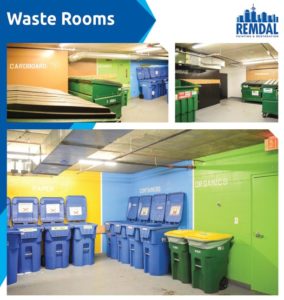
It may be as simple as organizing the space, adding colour to the walls, and encouraging greater respect for common areas.

The idea began with recognizing that people need to understand quickly how to sort their recycling and waste products. Otherwise, confused by a room full of green bins, blue containers, and garbage cans, many people give up and toss it in the closest bin.

By organizing the space, it shows an increased commitment to resolving an ongoing problem.

By colour coding with coordinated bins and wall colours,  it clarifies and simplifies what goes where. The result will be a clean & tidy waste room.  

If you are encouraged by the idea, contact us 604-882-5155 or info@remdal.com, and we’ll meet you, discuss your situation and provide a Waste Room Makeover proposal for your property. 


The post Clean & tidy, not your typical waste room appeared first on Remdal.


from Remdal https://ift.tt/2ZqbBQA

Clean & tidy, not your typical waste room

We all want to do our best for the environment. In our daily lives that begins with household recycling and garbage. 

Municipalities throughout Metro Vancouver have added various initiatives to encourage recycling, and they’ve also added financial penalties to trash haulers who have recyclables in their garbage pickups.

Regulation changes have continued with the addition of organic waste, aiming to separate out food scraps and reduce overall waste by another 30%. 

That is all well and good, but most building’s waste rooms exist somewhere between messy, disgusting and revolting. What if your property could start to resolve this issue? 

It may be as simple as organizing the space, adding colour to the walls, and encouraging greater respect for common areas.

The idea began with recognizing that people need to understand quickly how to sort their recycling and waste products. Otherwise, confused by a room full of green bins, blue containers, and garbage cans, many people give up and toss it in the closest bin.

By organizing the space, it shows an increased commitment to resolving an ongoing problem.

By colour coding with coordinated bins and wall colours,  it clarifies and simplifies what goes where. The result will be a clean & tidy waste room.  

If you are encouraged by the idea, contact us 604-882-5155 or info@remdal.com, and we’ll meet you, discuss your situation and provide a Waste Room Makeover proposal for your property. 


The post Clean & tidy, not your typical waste room appeared first on Remdal.


from Remdal https://ift.tt/2ZqbBQA

Tuesday, April 23, 2019

3 Questions to Ask Before Buying a Whirlpool Tub

Content originally published and Shared from http://perfectbath.com

Are you buying your first whirlpool bathtub? Let us help you narrow down the choices. Start by asking yourself the following questions:

Will it fit in the bathroom?
Make sure to measure your bathroom before you even look at a whirlpool, including any space you might gain taking down dividing walls or showers. “Most whirlpools come in three standard sizes,” says Morey. “Five feet, five and a half and six. But you can’t just consider the tub size — they’re all designed to be dropped into a deck, and that will take up more space, with the bare minimum adding at least a half-inch to your measurements on all sides.

“If you think you’d like to hold a lot of stuff like candles and oils near the water, you’ll also need extra space on the deck,” says Morey. “If you’re over six feet tall, you may want to forfeit deck space for more tub room.” Source: HGTV

Is your current heating system enough?
If you choose to heat your whirlpool with your existing in-home heating system, make sure it can handle the amount of water needed to fill the whirlpool. With an external system, the water in the tub will get cool quickly due to the circulating jets, so you will need to frequently refill the tub with hot water. A 50 gallon quick recovery system should be sufficient.

The other option is a self-heating system. A self-heating whirlpool comes with its own internal heating system that circulates the tub water and reheats when necessary. This is a good energy-saving option and the best way to keep your water temperature consistent. Source: DoItYourself

Which type of jet should you pick?
Choose between water jets or air jets. Water-jet whirlpool tubs force water through jets, giving more pressure and a forceful massage. In air-jet whirlpool tubs, air is forced through tiny holes for a lighter massage. A combination whirlpool tub uses both, but will be more expensive and may use more energy.

  • One drawback of water-jet and combination tubs is that you can’t use bath salts or oils, as these will damage the pumping mechanism.
  • Another water-jet and combination tub drawback is that some water stays in the jets, and mold can develop if they’re not regularly cleaned out. Source: WikiHow

We can help you figure out which brand or type of whirlpool tub will work best for your needs. Find out more when you call us today!


Contact:
Perfect Bath
Phone: Toll Free 1-866-843-1641
Calgary, Alberta
Email: info@perfectbath.com

The post 3 Questions to Ask Before Buying a Whirlpool Tub appeared first on Perfect Bath Canada.


from Perfect Bath Canada http://bit.ly/2W6LBE4

Photographer of the Day: KBT Images